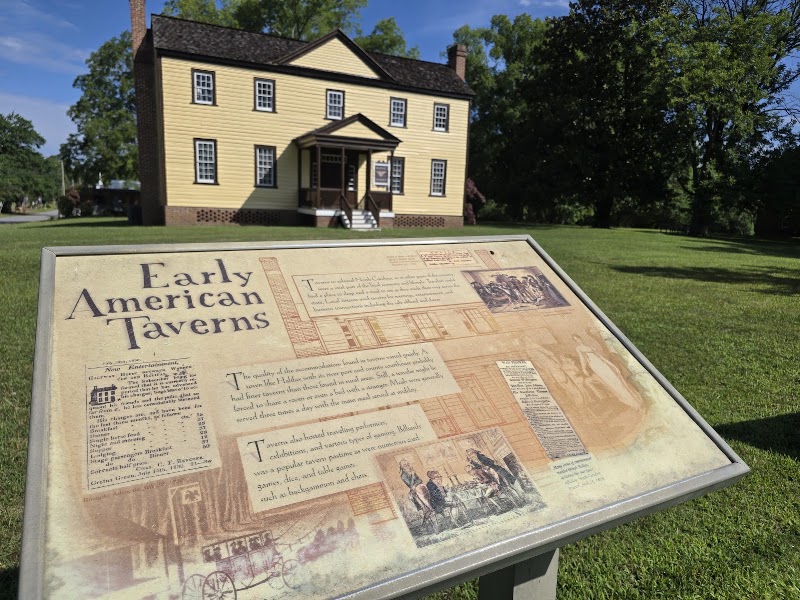
Halifax, Massachusetts, may be small in size, but it holds a significant place in the story of early New England. Tucked away in Plymouth County, this quiet town offers visitors a chance to step back in time without the crowds of nearby Boston or Plymouth. From colonial-era homes to remnants of the region’s industrial past, Halifax presents a unique blend of preserved architecture and natural beauty.
Exploring the historic sites here is about more than just looking at old buildings. It is an opportunity to understand the daily lives of the families who shaped the community after its incorporation in 1734. Many of these landmarks have survived for nearly three centuries, standing as silent witnesses to the American Revolution, the Industrial Revolution, and the slow march of modernization.
For history enthusiasts, genealogists, and curious travelers, Halifax is a hidden gem waiting to be discovered. The town’s historic district is compact enough to explore in a day, yet rich enough to warrant a slower pace. Whether you are visiting for a weekend or just passing through, the local landmarks offer a tangible connection to the past.
The Monponsett Ponds, which split the town geographically, have always been central to Halifax’s identity. These waters powered early mills and provided a route for trade and travel. Today, they serve as a scenic backdrop to many of the historic structures that line their shores.
As you plan your visit, remember that many of these sites are privately owned or have seasonal hours. Respecting property boundaries ensures that these treasures remain protected for future generations. The Halifax Historical Society and local library are excellent resources for current information and guided tour availability.
Below is a curated guide to the most compelling historic sites in Halifax. Each location tells a part of the town’s story, from its earliest days as a colonial outpost to its evolution into a peaceful residential community.
Halifax State Historic Site

| Address | 25 St David St, Halifax, NC 27839 |
|---|
| Maps | Click here |
|---|
| Website | Click here |
|---|
| Opening Hours | Monday: Closed
Tuesday: 9:00 AM – 5:00 PM
Wednesday: 9:00 AM – 5:00 PM
Thursday: 9:00 AM – 5:00 PM
Friday: 9:00 AM – 5:00 PM
Saturday: 9:00 AM – 5:00 PM
Sunday: Closed |
|---|
| Phone | (252) 583-7191 |
|---|
Feda Coleman★★★★★
My DAR chapter, Elizabeth Montfort Ashe, held our annual DAR Good Citizen awards to 5 area seniors in local schools.
The newly renovated Visitors Center was perfect for this and well received. We were treated very well by all staff. Free tours were offered.
Dyanne Boulineau★★★★★
Nobody there on a quiet Sunday morning passing through. An important piece of American history restored. We hope to be back during a reenactment event.
Jeff Yelverton★★★★★
Enjoyed my first visit to this town. Didn't know NC was so involved in the birth of our nation.
Richard Deary★★★★★
Most don't know about Halifax NC and immediately conjure visions of Nova Scotia when they hear the name. But Halifax NC is the birthplace of Independence and an untapped treasurer trove of historical importance. Although not as large or as famous as Williamsburg, it is definitely a recommended and worthwhile day visit for anyone that loves history and likes to step back into the past and experience 18th century first hand.
Bailey Barcome★★★★★
We had a great time visiting historic Halifax! The staff was incredibly helpful in curating our journey. We enjoyed the museum exhibit and visiting the preserved buildings.
Eagle Tavern

| Address | 2-8 St David St, Halifax, NC 27839 |
|---|
| Maps | Click here |
|---|
| Website | Click here |
|---|
| Opening Hours | — |
|---|
| Phone | (252) 583-7191 |
|---|
Bruce InCharlotte★★★★★
The Eagle Tavern is a storied landmark with roots reaching back to the late 18th century. Originally built around 1790, it began as a private residence before becoming a tavern known as the "Sign of the Thistle" in the 1770s. Over the years, it operated under various names and proprietors, serving as a hub for meetings, entertainment, and political gatherings. Notably, it hosted members of the Provincial Congress during debates on independence and welcomed distinguished guests such as George Washington and the Marquis de Lafayette, whose 1825 visit was commemorated with a lavish banquet at the tavern as noted on the historical marker in front. The building was relocated in the 1970s to its current site near the Halifax Visitor Center and restored to reflect its historic character.
Today, Eagle Tavern is part of the Historic Halifax State Historic Site and is open for self-guided tours. The tavern itself serves as a museum exhibit, showcasing artifacts and stories from its vibrant past.
Julio Santos★★★★☆
Would give 5 stars if we could explore the second floor but we'll restored building... I was kinda creepied out... this is a old building 🏚 haha
Great information and artifacts inside this museum
gray photojournal★★★★★
The Eagle Tavern (remaining structure moved from Andrew Jackson School location) is a historic tavern built in the 1790s in Halifax, Halifax County, North Carolina. The tavern (known as the "Eagle Hotel" in the 1820s) served as an overnight stop on February 27, 1825 for the official traveling party during the Visit of the Marquis de Lafayette to the United States.
The original Eagle Tavern operated during the colonial period called "The Sign of the Thistle" in the 1770s by William Martin.
[PHOTOfollow IG @grayphotojournal]
Historic Halifax - Sally-Billy House

| Address | 74 Fishing Club Rd, Halifax, NC 27839 |
|---|
| Maps | Click here |
|---|
| Website | Click here |
|---|
| Opening Hours | — |
|---|
| Phone | (252) 583-7191 |
|---|
Kevin Smith★★★★★
This was special day for our family. Sally and Billy are my sixth Great Grandparents. It was pretty cool to have my youngest grandson be able to make a connection in our family history.
Michael Cousins★★★★★
The historic district is great to walk around and catch up on some history vist when the visitors center is open to learn even more about the town
Thomas Barber★★★★★
Interesting history. Nice visit.
Stephen Flitcroft★★★★★
The guide was very good
Susan Williamson★★★★★
Amazing place.
Historic Halifax Underground Railroad Trail

| Address | 426 Dobbs St, Halifax, NC 27839 |
|---|
| Maps | Click here |
|---|
| Website | Click here |
|---|
| Opening Hours | Monday: 10:00 AM – 4:00 PM
Tuesday: 10:00 AM – 4:00 PM
Wednesday: 10:00 AM – 4:00 PM
Thursday: 10:00 AM – 4:00 PM
Friday: 10:00 AM – 4:00 PM
Saturday: 10:00 AM – 4:00 PM
Sunday: Closed |
|---|
| Phone | — |
|---|
Melissa Hockaday★★☆☆☆
While a significant historical spot, it is a road leading to the river with three small placards of information about slave bounties and the Underground Railroad. Beautiful drive but not much to see
Charters of Freedom - Halifax, NC

| Address | 10 King St, Halifax, NC 27839 |
|---|
| Maps | Click here |
|---|
| Website | Click here |
|---|
| Opening Hours | Monday: Open 24 hours
Tuesday: Open 24 hours
Wednesday: Open 24 hours
Thursday: Open 24 hours
Friday: Open 24 hours
Saturday: Open 24 hours
Sunday: Open 24 hours |
|---|
| Phone | (910) 508-3165 |
|---|
Bruce InCharlotte★★★★★
"Resolved, That the delegates for this Colony in the Continental Congress be empowered to concur with the delegates of the other Colonies in declaring Independency..." - The Halifax Resolves, April 12, 1776
I have seen other Charters of Freedom installations in other cities. This one is slightly different as it uniquely includes the Halifax Resolves, the 1776 document that marked North Carolina's formal call for independence from Britain. It authorized North Carolina's representatives - Joseph Hewes, William Hooper, and John Penn - to join other colonies in declaring independence, a bold move that helped pave the way for the Declaration of Independence less than three months later.
The installation was spearheaded by Foundation Forward, Inc., a nonprofit dedicated to civic education, and supported by local leaders and donors who recognized Halifax's pivotal role in Revolutionary history. Far more than a monument, the site serves as a hands-on educational resource, especially during annual events like Halifax Day, when reenactments, artisan fairs, and living history demonstrations bring the past vividly to life. The display is open to the public year-round and is a centerpiece of the Historic Halifax State Historic Site, offering visitors a tangible connection to the ideals and debates that shaped the United States.
William R Davie House

| Address | 18 Norman St, Halifax, NC 27839 |
|---|
| Maps | Click here |
|---|
| Website | Click here |
|---|
| Opening Hours | — |
|---|
| Phone | (252) 583-7191 |
|---|
Bruce InCharlotte★★★☆☆
The historical marker is in front of a beautiful home just to the north of Halifax and points out the hero that lived here. It reads, "William R. Davie. 1756-1820. A militia officer during the Revolution; governor, 1798-99; envoy to France; "father" of University of N.C. Lived in this house." The house is in the Georgian Federal design with a two-story façade.
There is also a caption in front of the house. But this is marker number E-4 and it was erected in 2014 by the North Carolina Office of Archives and History.
William Richardson Davie, born in England in 1756 and raised in South Carolina, was a distinguished Revolutionary War officer, eloquent statesman, and founder of the University of North Carolina. After studying at Princeton and briefly practicing law, he joined the Patriot militia, rising through the ranks and earning acclaim for his daring cavalry raids and strategic supply work under General Nathanael Greene. A committed Federalist, Davie served in the North Carolina legislature and played a pivotal role at the Constitutional Convention, advocating for Southern interests while supporting compromise to secure union. As governor, he helped navigate tense diplomatic waters with France, later serving as a U.S. envoy and negotiator with the Tuscarora tribe. Though his later years were marked by personal loss and political retreat, Davie remained engaged with the university he helped establish, leaving behind a legacy of leadership, education, and public service when he died in 1820 at his South Carolina plantation, Tivoli.
I'm not sure if the home is private or open for tours. There is room to stop for photos and to read the marker.
Jon L Albee★★★★★
Halifax was once an important colonial town, and is now almost a ghost town. For an idea of what Halifax probably looked like 250 years ago you can appreciate this beautiful house.
Mike Smith★★★★★
Share with those who like history
Bradford-Denton House

Bob Wydra★★★★★
Fantastic renovation of an 18th century home with it's out-buildings. Not open during weekdays.
Julio Santos★★★★☆
Nice staff ... very knowledgeable about the 1800s artifacts and even made breakfast with the kitchen ware to show guests ... old country living back then
Historic Halifax - Tap Room

| Address | 101 King St, Halifax, NC 27839 |
|---|
| Maps | Click here |
|---|
| Website | Click here |
|---|
| Opening Hours | — |
|---|
| Phone | (252) 583-7191 |
|---|
Daddy Duck02 (Daddyduck02)★★★★★
Historic Halifax is a small town in northeastern North Carolina. The buildings are the same as if it were the late 1600’s. Experience life like it was when the Halifax Resolves were signed into law setting the preamble to the Constitution of the United States. Must see to appreciate.
Suzette Story★★★★★
It is a very to visit.
Historic Courthouse of Halifax

Bruce InCharlotte★★★★★
Halifax County was formed in 1758 from Edgecombe County, it was named for George Montague-Dunk, the 2nd Earl of Halifax, who served as president of the British Board of Trade and Plantations. Before European settlement, the region was home to the Tuscarora people, whose presence shaped the early landscape until they were displaced by colonial expansion.
Halifax County’s most enduring claim to fame is the Halifax Resolves, adopted on April 12, 1776. This bold declaration empowered North Carolina’s delegates to the Continental Congress to join other colonies in seeking independence from Britain. It was the first official action by any colony calling for independence, earning Halifax the motto "First in Freedom." That said, the Mecklenburg Resolves were adopted on May 31, 1775 in Charlotte North Carolina and were a precursor to the Halifax Resolves of 1776 and the Declaration of Independence itself.
The current courthouse, located at 44 King Street in the town of Halifax, was built between 1909 and 1910 and stands as the third courthouse on that site. It is a striking example of Classical Revival style, with Late Victorian influences woven into its detailing. The building’s most commanding feature is its tetrastyle Corinthian portico—four stately columns supporting a pedimented entrance that evokes the grandeur of ancient Rome. Crowning the structure is a two-stage cupola.
Inside is a central hallway with high ceilings and wide corridors, designed to accommodate both foot traffic and the ceremonial weight of legal proceedings. The main courtroom is the architectural centerpiece. It features a raised judge’s bench framed by classical pilasters and a decorative entablature, reinforcing the authority of the judicial process. The jury box and spectator seating are arranged with clear sightlines.
IGWTsoWWG1WGA★★★★★
First in Freedom
Dean Joyner★★★★☆
Time to pay taxes
Tips for Visiting Historic Sites in Halifax
A little preparation goes a long way when exploring Halifax’s historical landmarks. The town retains a rural, residential character, which means access to sites can vary by season and ownership. The following tips will help you make the most of your visit while being a respectful guest in this close-knit community.
1. Start at the Halifax Historical Society & Museum
The historical society is the best first stop for orientation. Volunteers can provide maps, point out which buildings are open to the public, and share stories you won’t find in guidebooks. Check their seasonal hours before you arrive.
2. Respect Private Property
Many historic homes in Halifax remain private residences. Admire them from the sidewalk or road, and never enter driveways or yards without explicit permission. A telephoto lens is a good alternative to getting closer.
3. Plan Around the Ponds
The Monponsett Ponds create a natural dividing line through town. Use them as a geographic reference when planning your route. Parking near the ponds is limited, especially in summer when boaters and swimmers are present.
4. Wear Comfortable Walking Shoes
Halifax’s historic sites are spread out, and sidewalks are not always available. You’ll likely walk on grassy shoulders or uneven ground. Sturdy, comfortable footwear will make the experience far more enjoyable.
5. Visit During Off-Peak Hours
Weekday mornings and early afternoons are ideal for exploring. You’ll encounter less traffic on the narrow roads and have better opportunities for photographs without modern vehicles in the frame.
6. Combine History with Nature
Halifax is home to conservation areas and walking trails that connect to its historic landscape. Pairing a visit to an old mill site with a short hike along the ponds gives you a fuller sense of how geography shaped the town’s development.
7. Bring a Physical Map or Download Offline Maps
Cell service can be spotty in some parts of town. Having a paper map from the historical society or downloading offline maps beforehand ensures you won’t lose your way between sites.
Halifax rewards travelers who take their time and pay attention to the details. The town’s history is written in its weathered clapboards, stone foundations, and quiet pond shores. Each site offers a different perspective on the people who built this community from the ground up.
As you leave, you’ll carry with you a deeper appreciation for the resilience and craftsmanship of early New Englanders. Halifax may not be the most famous destination in Massachusetts, but for those who seek authentic history without the crowds, it is a place worth returning to again and again.
Mia Charlotte is a food journalist and certified Local Guide based in Brooklyn, New York. For over ten years, she has explored every corner of the city to discover hidden gems and the best places to visit.